The Liviqa API
The consent layer between a person's health data and the organisations they share with. Built on HL7 FHIR R4 and OpenAPI 3.1, hosted in the EU, and every call for health data checks the person's current yes.
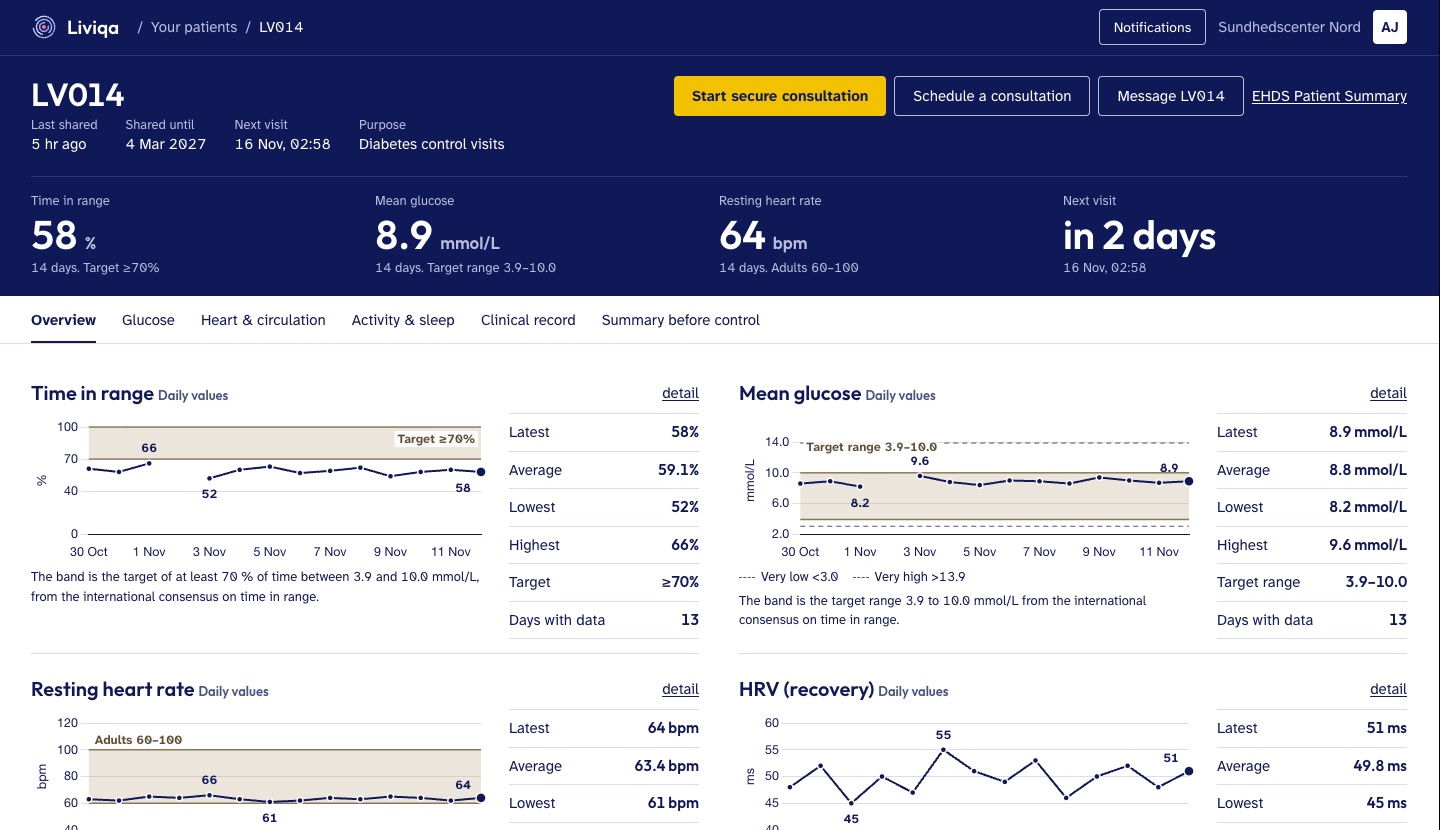
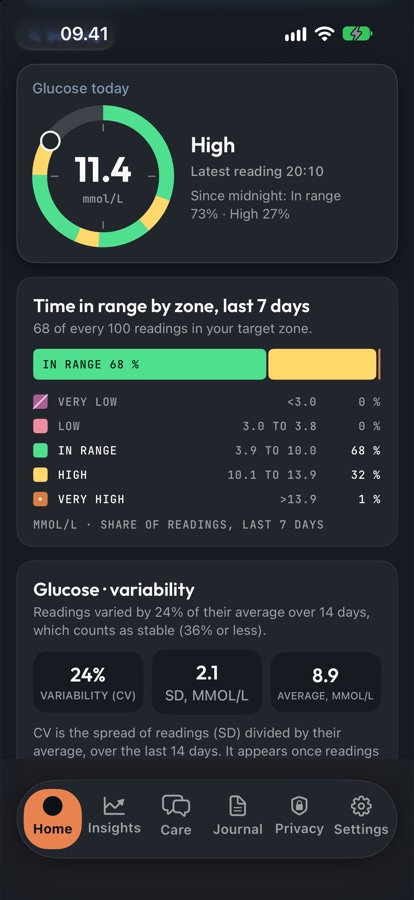
The consent layer between a person's health data and the organisations they share with. Built on HL7 FHIR R4 and OpenAPI 3.1, hosted in the EU, and every call for health data checks the person's current yes.
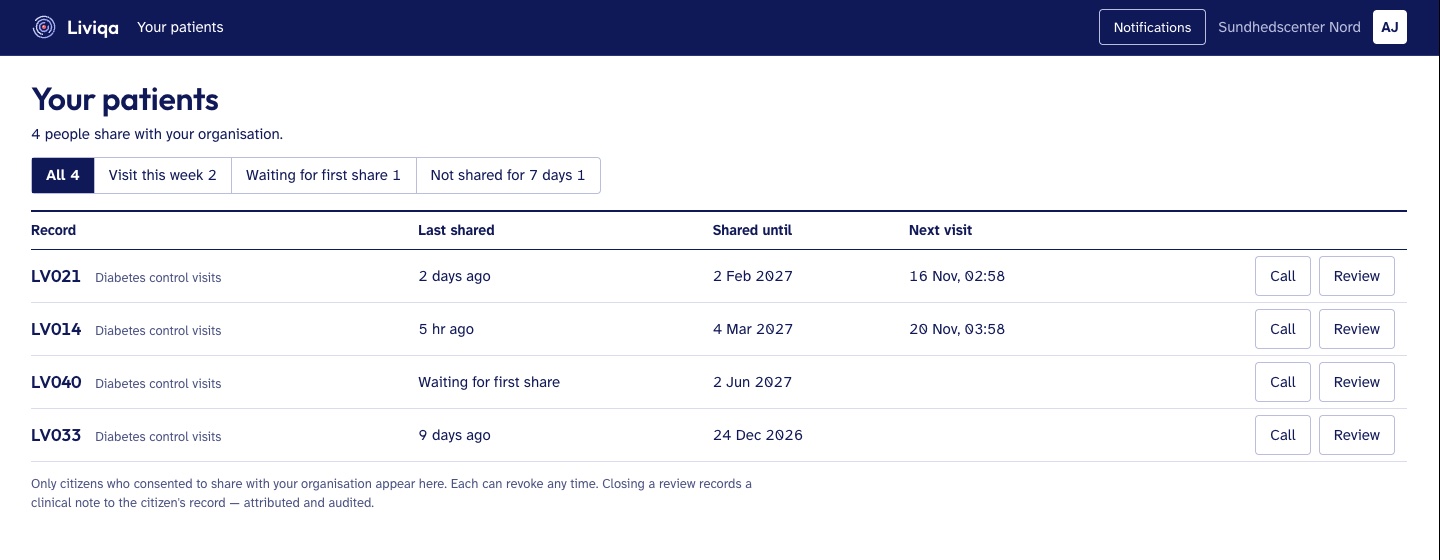
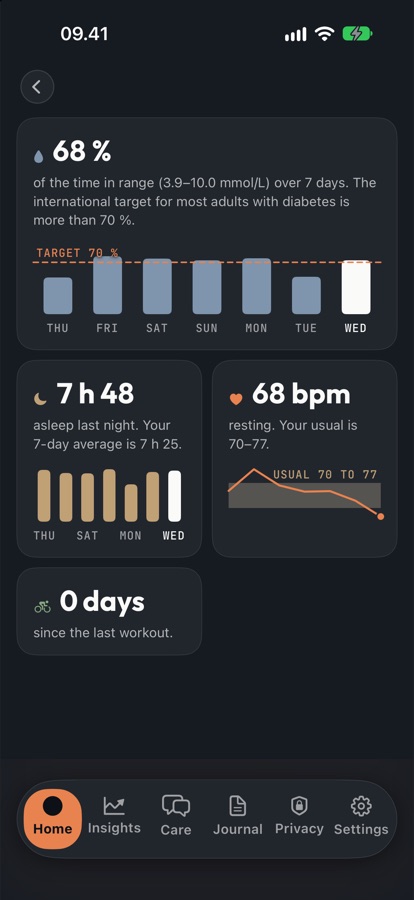
The free iPhone app, Liviqa Pro for organisations and the API between them are in test with invited users. These are the screens your service connects to. Every person shown is a sample.
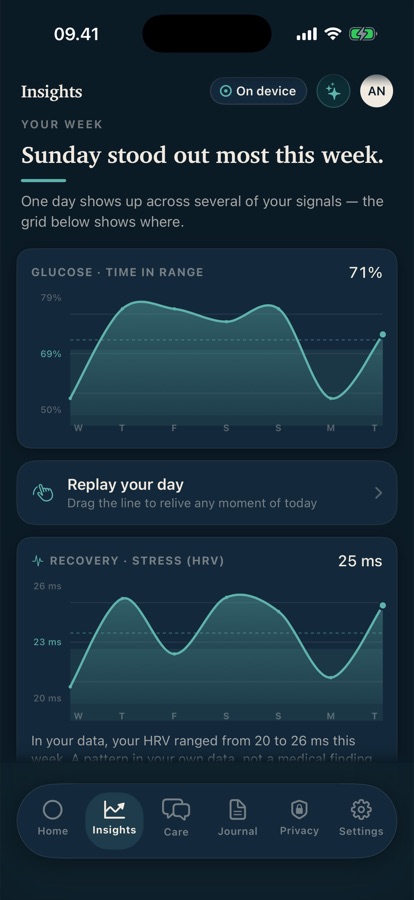
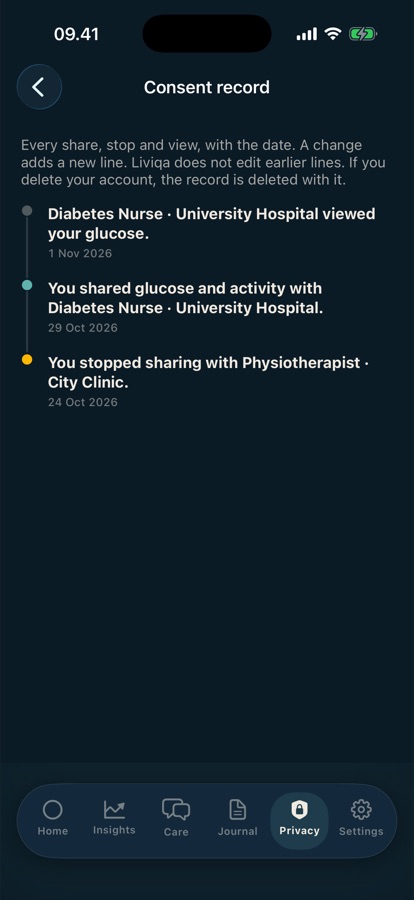
Redrawn from the Data sources screen in the app. Each source is read on the phone, and the person switches each one on.
Dexcom sensors cannot be read yet. Android follows later, through Google's Health Connect.
Your service receives what people share from the Liviqa app on their own phone: coaching programmes, studies, insurer health programmes. You get the shared summaries and the consent record behind them. You receive only what the person chose to share.
Clinics read the summary before the visit and a patient summary that follows the structure used in the EHDS, as HL7 FHIR R4, so shared data lands in the record system they already use. Links to hospital systems through SMART on FHIR, set up for each customer.
Shared data is sent in common health formats. Each line below is in the running code or the published API description.
Remote patient monitoring on the Danish and UK model: build your own questionnaires and monitoring plans, limits on readings and alerts, up to a hospital-at-home service. This follows the CE mark.
A person gives a clinic a yes, and the clinic exports the summary before the visit. Shortened, with invented values.
POST /grants
Authorization: Bearer <token>

{
  "recipientId": "rcp_sample_clinic",
  "recipientRole": "clinical_nurse",
  "purpose": "Check-up before the visit",
  "scopeKeys": ["glucose", "sleep", "activity"],
  "granularity": {
    "glucose": "summary",
    "sleep": "trend",
    "activity": "summary"
  },
  "expiry": "2026-12-31T23:59:59Z",
  "delivery": "live_view"
}

201 Created
{ "id": "grt_sample_0001" }

POST /grants/grt_sample_0001/revoke
201 Created
{ "revoked": true }{
"resourceType": "Bundle",
"type": "document",
"timestamp": "2026-11-17T23:59:00Z",
"entry": [
{ "resource": {
"resourceType": "Composition",
"type": { "coding": [{ "system": "http://loinc.org",
"code": "34133-9" }] },
"title": "Summary before control" } },
{ "resource": {
"resourceType": "Patient",
"identifier": [{
"system": "https://liviqa.app/id/console-alias",
"value": "SAMPLE-07" }] } },
{ "resource": {
"resourceType": "Observation",
"status": "final",
"code": { "coding": [{ "system": "http://loinc.org",
"code": "4548-4" }],
"text": "HbA1c" },
"valueQuantity": {
"value": 7.0, "unit": "%",
"system": "http://unitsofmeasure.org",
"code": "%" } } }
]
}Described in OpenAPI 3.1. Sign-in with a bearer token from Liviqa's own login service in the EU. Servers run in Paris.
One operations board watches every Liviqa service. Below are the Liviqa rows, redrawn from the board as it read on 18 November 2026 at 05:05.
| Service | Address | Status |
|---|---|---|
| Website | www.liviqa.app | Up |
| API | api.liviqa.app | Up |
| Sign-in | auth.liviqa.app | Up |
| Liviqa Pro, test | sandbox.liviqa.app/live | Up |
| Control room | sandbox.liviqa.app/control | Up |
| Translations | weblate.liviqa.app | Up |
GET https://api.liviqa.app/health

{ "status": "ok",
  "service": "liviqa-backend",
  "scope": "derived-only" }
The real answer. "Derived-only" means the server keeps summaries the phone worked out, not raw readings from devices.
The full documentation and a test workspace are open by invitation while Liviqa is in test. Tell us what you want to build and we reply with access.