Liviqa is a free app that keeps a person's health data on their own phone: iPhone now, Android later. Liviqa Pro is the platform where clinics, health coaches and research teams see what each person shares, for as long as the person allows.
A product of PPCN, Copenhagen.
Clinics, municipalities, insurers and coaches want to follow people between visits. People hold back, because once their data is sent, they lose control of it.
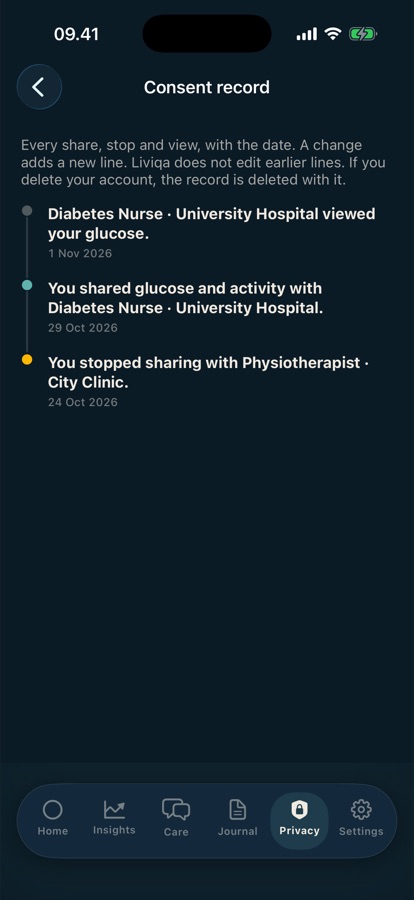
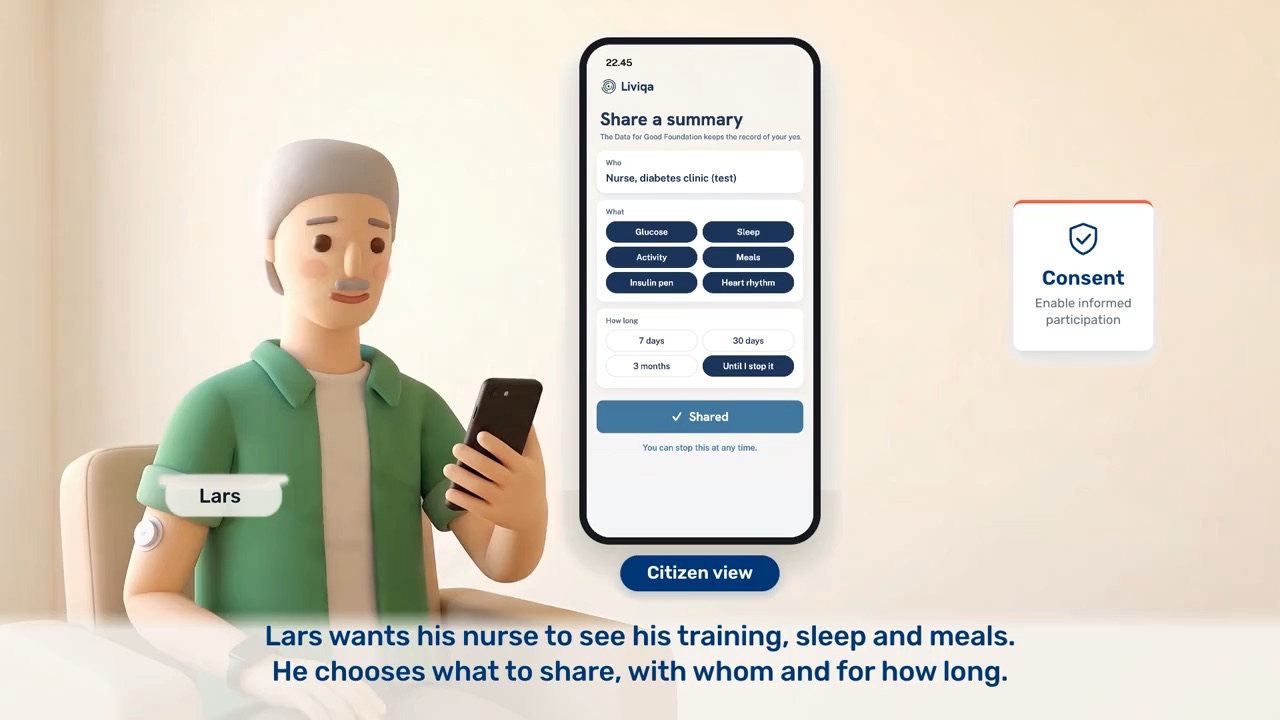
Liviqa works the other way round. The raw readings never leave the person's phone. An organisation sees a daily summary of the areas the person chose, for as long as the person allows. When the person stops sharing, the organisation's access ends at once, and every view stays in the person's own consent record.
The usual way
Raw data is copied from the phone to a company server, and the organisation keeps a copy.
With Liviqa
Raw data stays on the phone. The organisation sees a daily summary, with the person's yes, for as long as the share runs. One tap ends access.
You keep your data. If you disagree with your coach, clinic or insurer, you stop sharing in one tap.
You see what you need to follow up, without storing raw health data or carrying the risk of holding it.
Researchers get group figures from people who said yes. Raw readings never leave the phone.
The independent Data for Good Foundation checks and records each yes. Liviqa and PPCN do not decide who gets a person's data.
A person with a long-term condition lives the whole year with it. Their clinic sees a few visits. The readings from all the days in between sit on the person's own phone and watch, out of reach of the people treating them.
Liviqa lets people carry that data through care and over time, and share it on their own terms.
Liviqa reads the sensors and watches people already wear, through the phone. There is no extra device to buy, ship or collect back.
Dexcom sensors cannot be read yet. More devices follow as they sync with Apple Health, and later with Google's Health Connect on Android.
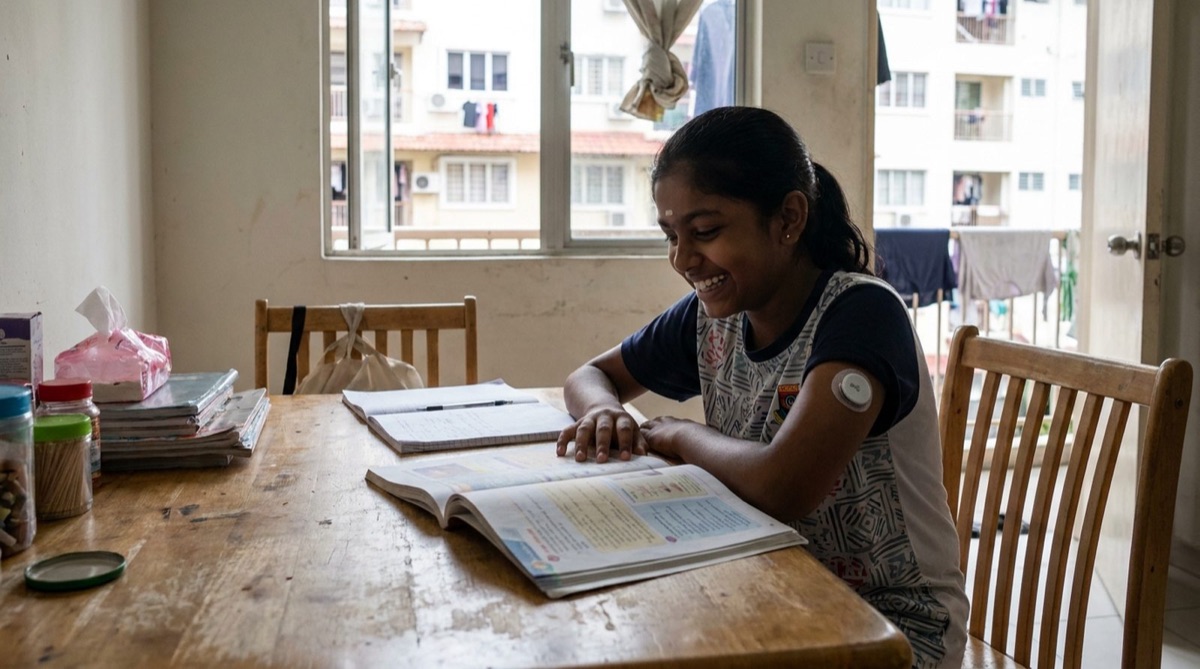
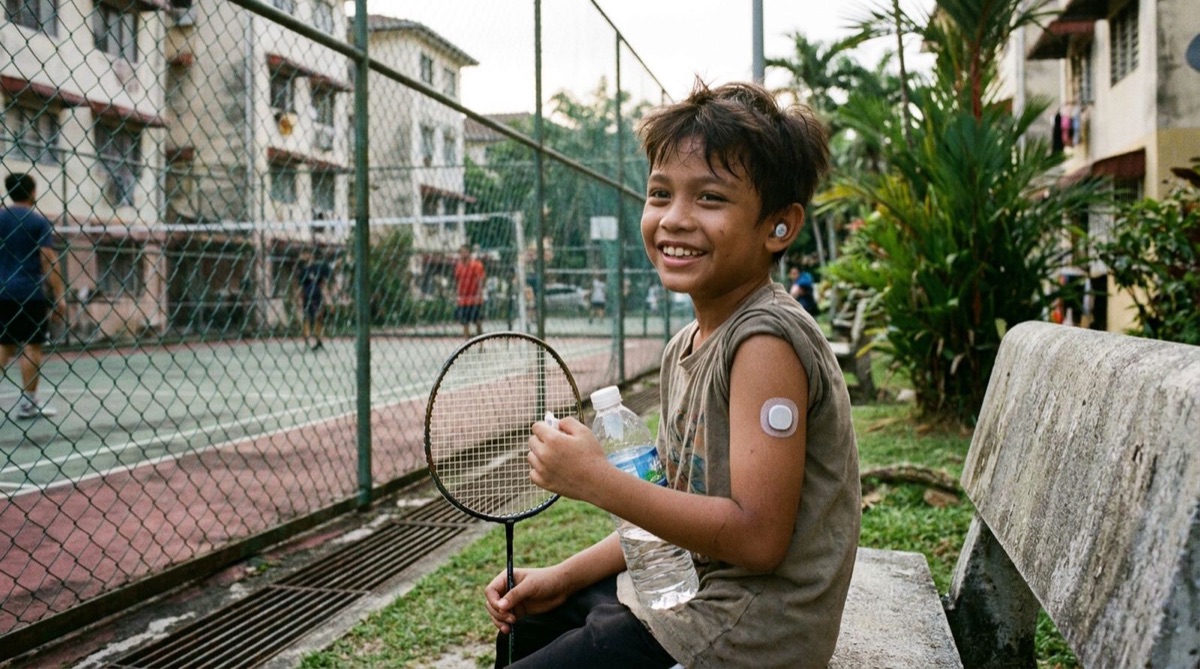
Children with type 1 diabetes live with a sensor, a pen and a phone every day. Their parents, the school and the clinic each need a different view. With Liviqa the family decides who sees what, for how long, and can stop it at any time.
We are preparing a project for children with type 1 diabetes and their families.


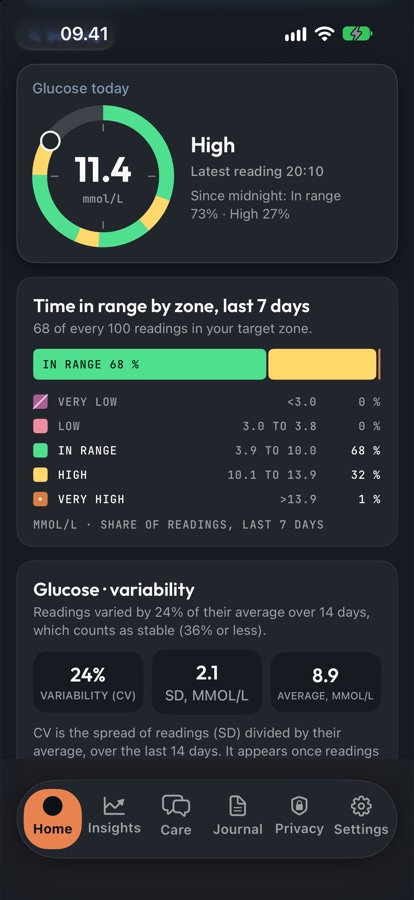
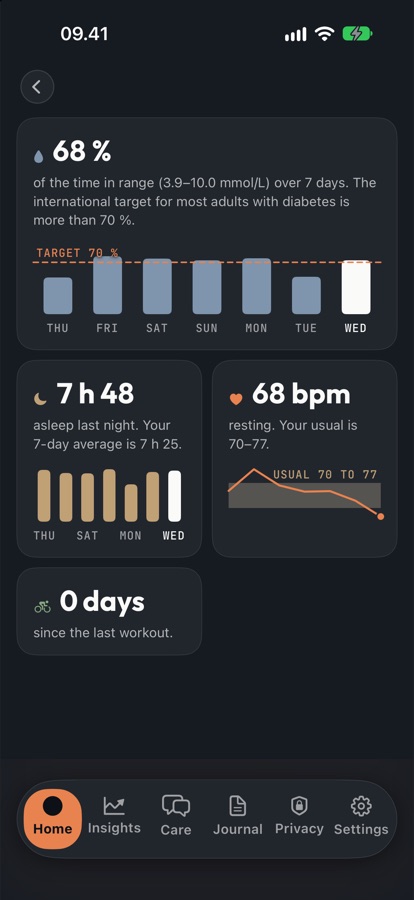
Liviqa works out the patterns on the phone itself: sleep, glucose, activity and recovery.
A nurse, a doctor, a coach or a study. You pick the areas and the end date.
They see daily summaries. The raw readings stay with you.
Your consent record shows every share, stop and view, with the date.
The servers run in the EU, in Paris. Each organisation sees only the people who share with it.
How Liviqa works with the Data for Good Foundation. 3 min 16 s, captions in the picture.
Organisations pay for Liviqa Pro. People use the app for free and choose what each organisation sees.

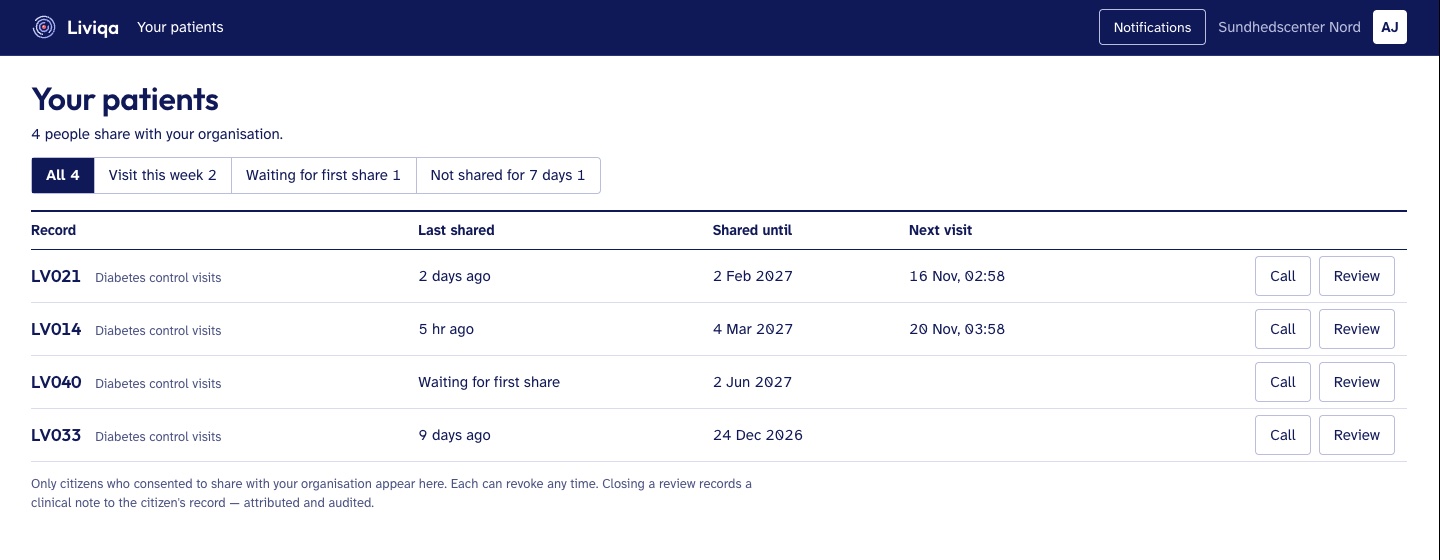
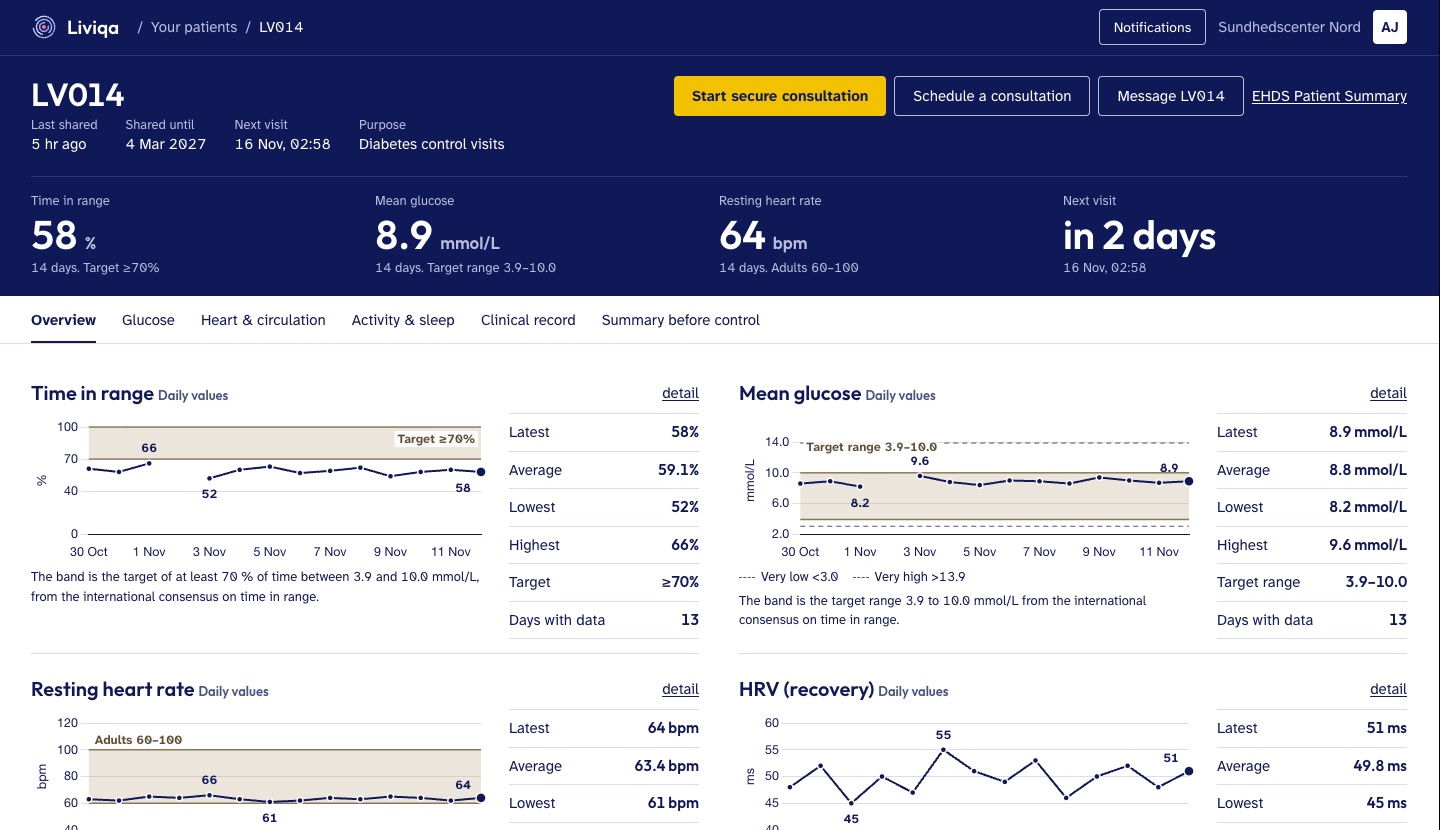
Between visits, see the daily summaries each person shares: one page per person with daily charts, a summary before the visit, secure messages, and review notes signed and logged. Today for wellness and coaching; clinical use follows the CE mark.
Give your clients the app for free. You get an overview of every client's sleep, activity and glucose between sessions, for as long as each client shares.
Participants join a study with Liviqa on their own phone. The Data for Good Foundation is building a consent record designed to stay with the trial file for as long as it is kept: at least 25 years under the EU Clinical Trials Regulation. When a vendor contract ends the record stays, so the sponsor can show that each data point came with a valid consent.
Prevention and follow-up at home, where the data stays with the citizen. It works next to the systems you already run.
The clinic starts a video consultation from the person's page in Liviqa Pro. During the call, the clinician sees the summaries the person chose to share, next to the video. The video runs on our own server in the EU.
Liviqa Pro is built for integrated care around the person, following the principles of the International Foundation for Integrated Care (IFIC), and for value-based care for people living with long-term, non-communicable conditions. The person keeps one record on their phone and shares it with each carer separately: the GP, the hospital clinic, the municipal nurse or a coach.
People never pay to use the app. Organisations pay for Liviqa Pro: for the service, and for insights from groups of people who chose to share or donate. Nobody pays for one person's data.
Free app, data on the phone
Recorded by the Data for Good Foundation
Clinics, coaches, insurers, regions pay for the service
Research, pharma, public health: group figures only
Clinics, health coaches, insurers with health programmes and regions pay for Liviqa Pro. They get the follow-up tools, the video visits and an overview of everyone who shares with them.
With their own yes, people can donate data to research. Research teams, pharmaceutical companies and public health get group figures: at least 11 people behind each figure, from people who said yes, never one person's data. A Liviqa data analyst can compare Liviqa groups with other donated data, as group figures only, never linked person by person.
Liviqa is run by a company. Before a person, a clinic or an authority trusts a company with health data, they need a party that has nothing to gain from the data. Liviqa gives that role to the Data for Good Foundation, which Claus co-founded in 2017.
Over several years, a group of people at the Foundation has built an infrastructure for governing health data: who may use the data, for which purpose, and a record of each decision.
Existing systems and data stay where they are. Each organisation keeps responsibility for its own systems, data and duties, while the Foundation governs the requests, the decisions and the evidence between them.
The Data for Good Foundation is an independent, third-party data intermediary, and it runs the governance of every share. Liviqa and PPCN do not decide who gets a person's data. The person decides, and the Foundation checks and records that decision.
Together with Steno Diabetes Center Aarhus, the Alexandra Institute and the Data for Good Foundation, we are preparing a clinical trial of Liviqa in Danish healthcare. We have also applied to the Danish Life Science Cluster for support. The Foundation's service is in test, and no real patient's data runs through it yet.
Liviqa is for everyone who wants to know more about their own health and wellbeing, not only people with diabetes. It learns each person's own patterns on the phone itself, and adds personal health context such as meals and journal notes, so what it shows becomes more personal over time.
It needs a watch, ring or sensor. Without one, a standard phone already shows most of what Liviqa would.
The app is free. A copy of your data in a cloud of your own will be the one paid option. We aim to keep Liviqa free for everyone through donations.


The test works best with a watch and an Abbott FreeStyle Libre glucose sensor. Dexcom sensors cannot be read yet. More devices follow step by step, as they sync with Apple Health, and later with Google's Health Connect.
Liviqa will get a health coach you can talk to about your own data. First we test it with a small group in the iPhone test. Then it runs as a secure service on a server in Europe. Later, if we can, it runs on your own phone with our own model. It is not running yet while we check the legal rules for health data and AI. It will never give doses.
The test comes before the app is in the App Store, so joining takes a few steps.
We only need the email address of your Apple ID. We never ask for your Apple password, and you should never give it to anyone.
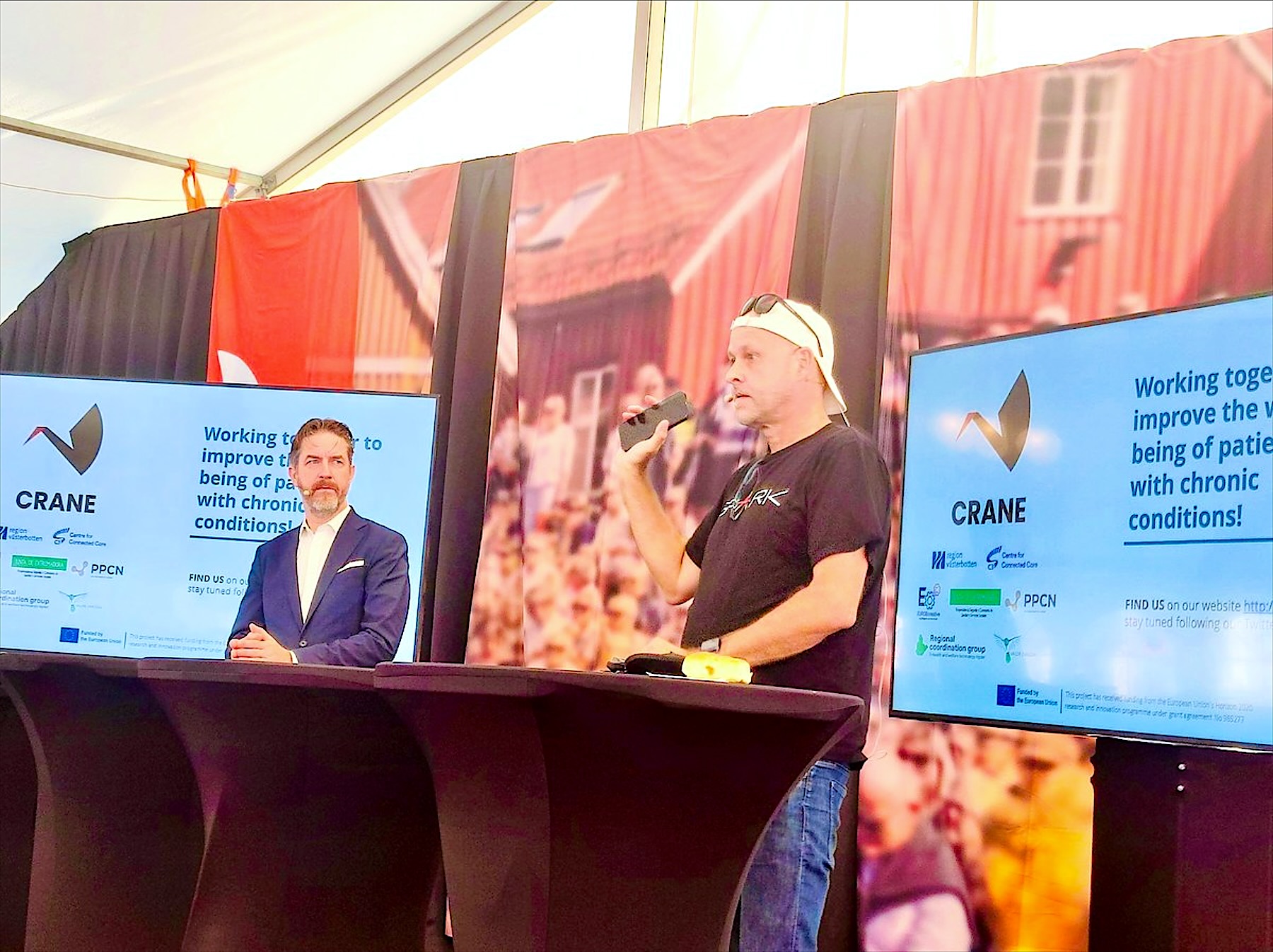
Liviqa comes from PPCN, the company Claus has run since 2014. PPCN was a partner in CRANE and ROSIA, two Horizon 2020 procurements for chronic and remote care. In CRANE, PPCN led the work package that designed the care model and the technical architecture, including a way to share data that keeps the patient in control. ROSIA brought rehabilitation at home for people with COPD and diabetes, built for rural and isolated areas where the nearest clinic can be far away.
In CRANE, pilots in Spain, Norway and Sweden analysed more than 7,000 health measurements with secure multiparty computation, without exposing the raw data. Authorised health professionals saw only the data their role allowed.
Liviqa builds on that work. It runs on the phone and watch people already own, wherever they live.
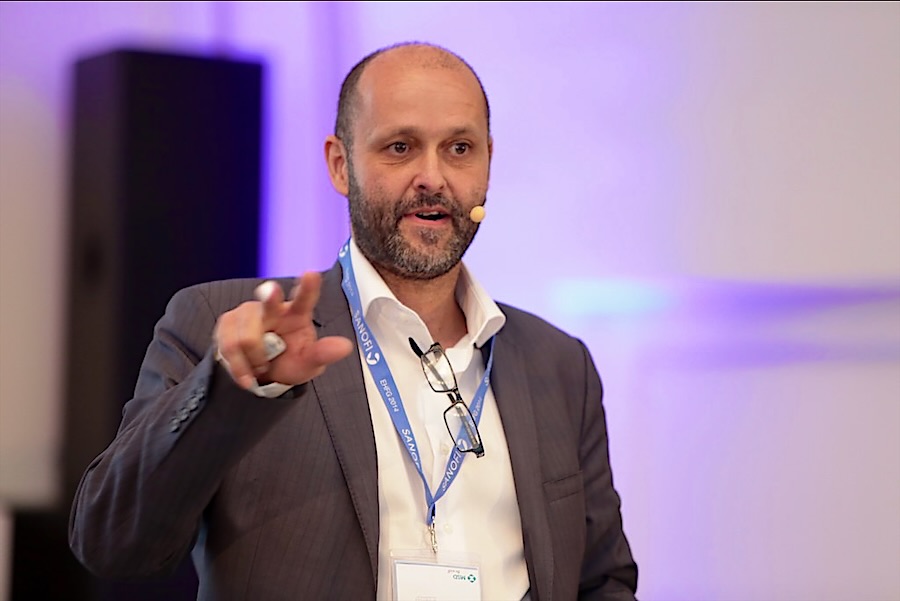
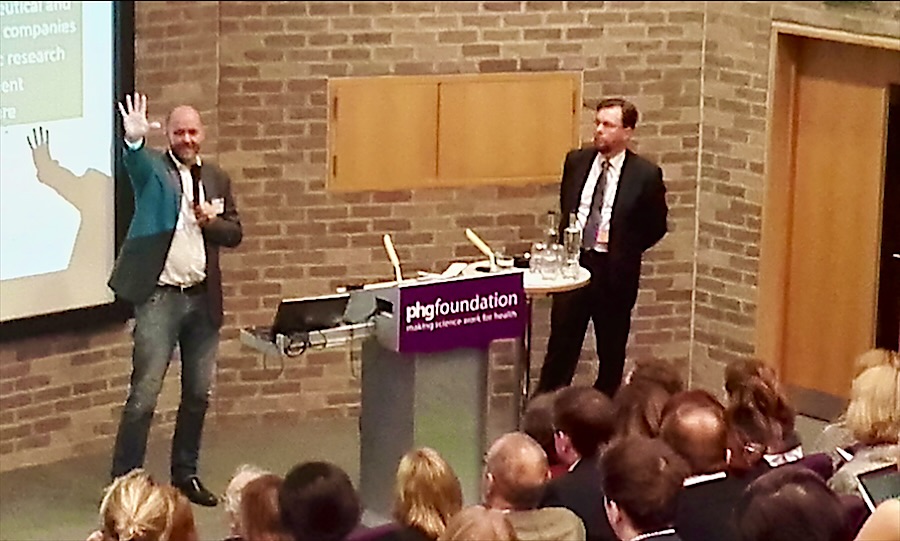
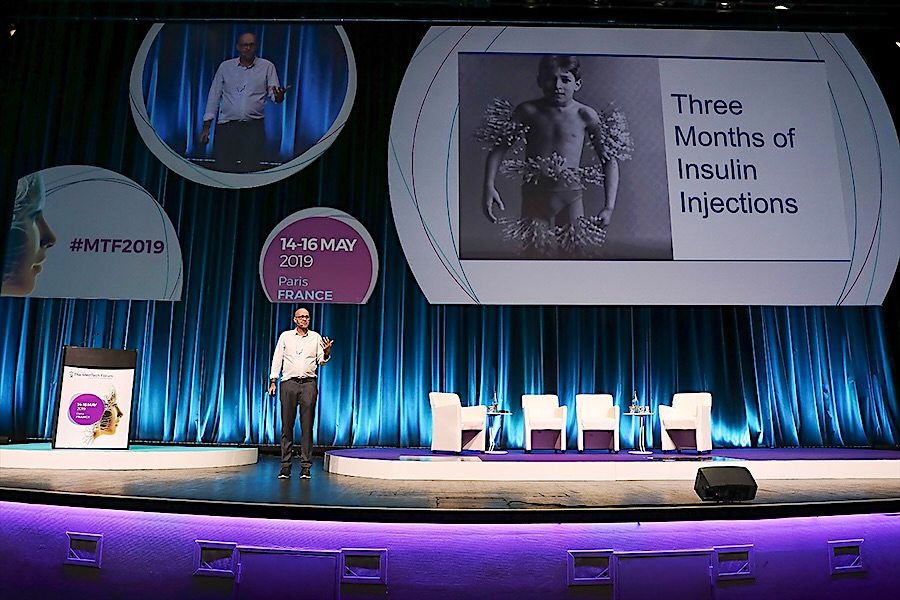
It started with Claus's son, who has type 1 diabetes. The family lived with sensors, pens and apps every day, and with data that stopped at each clinic door. In 2017, at the PHG Foundation conference, Claus spoke about the future of diabetes care through his son's story.
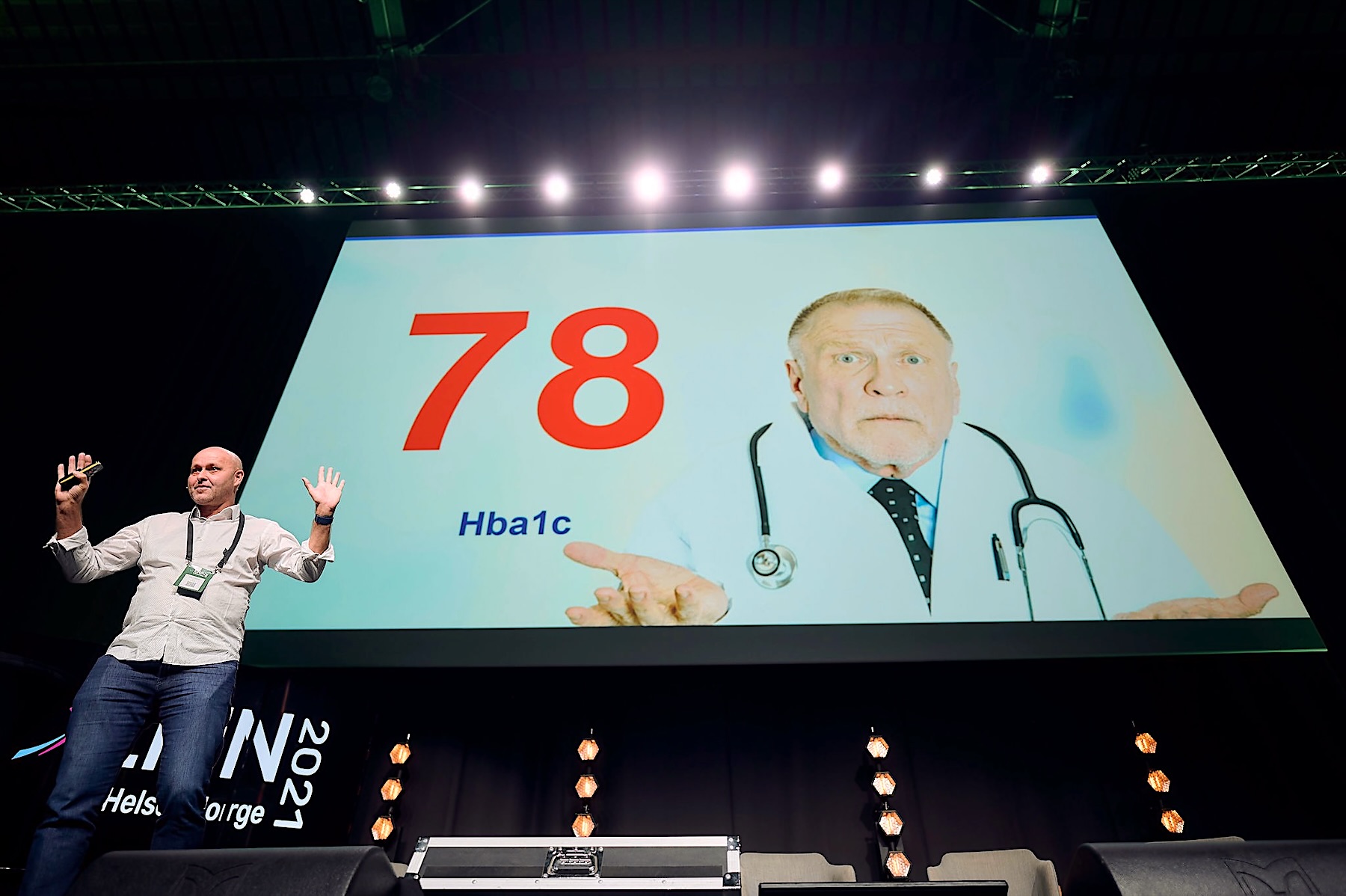
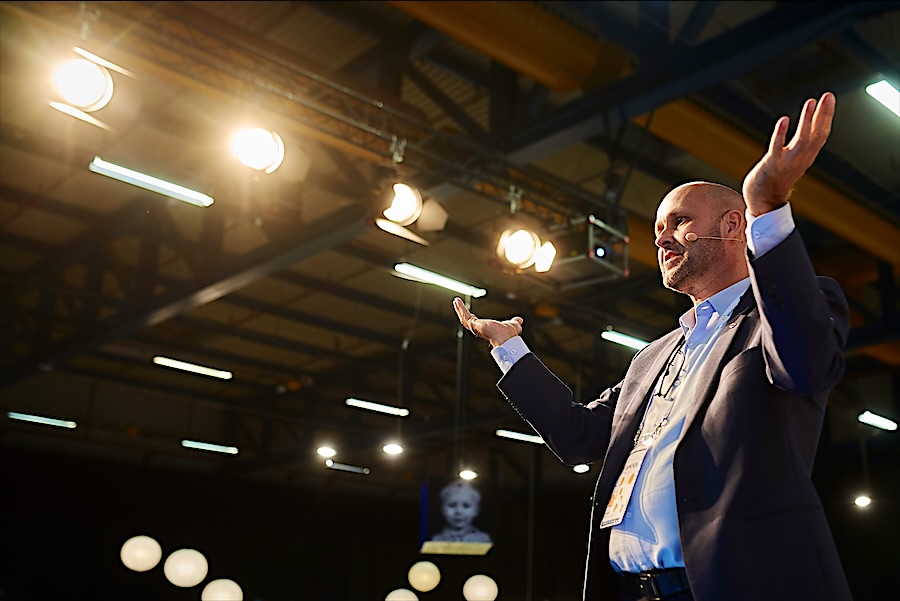
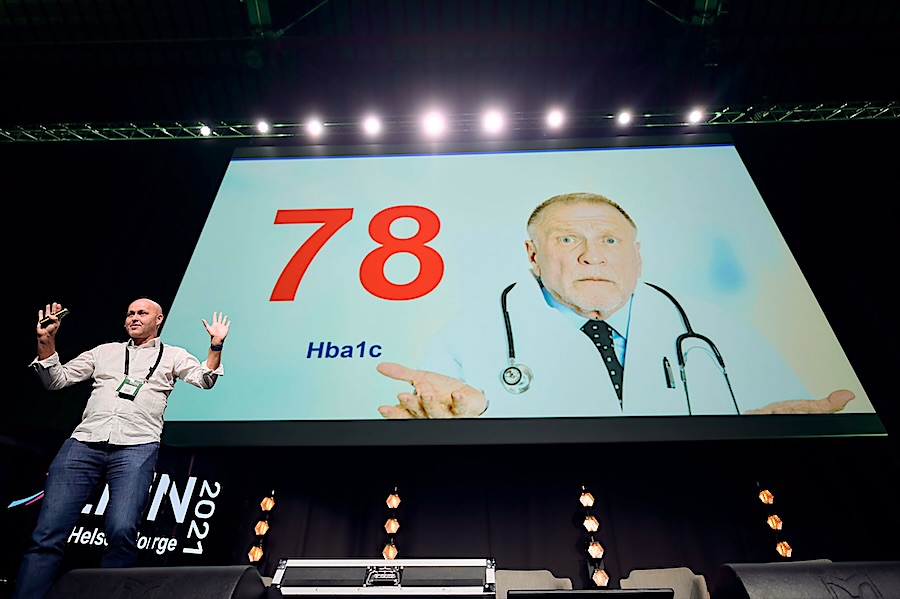
Then Claus got diabetes himself: LADA, an autoimmune form of diabetes. Later came atrial fibrillation, a heart rhythm condition, and he is a cancer survivor. At EHiN, E-health in Norway, in Oslo in 2021, he put his own long-term glucose, an HbA1c of 78, on the big screen.
He wanted to show his data live while he spoke, shared by him and stopped when he said so. No app let him do that safely, so his team built Liviqa.


Denmark is often named among the most digital health systems in the world. Hospitals, GPs and municipalities share data on common standards. Claus worked inside that build-up, and then on the standards that let personal devices share data.
For developers: the Liviqa API
POST /grants
Authorization: Bearer <token>
{
"recipientRole": "clinical_nurse",
"purpose": "Check-up before the visit",
"scopeKeys": ["glucose", "sleep"],
"expiry": "2026-12-31T23:59:59Z"
}
201 Created { "id": "grt_sample_0001" }
POST /grants/grt_sample_0001/revoke
201 Created { "revoked": true }▍
Liviqa is built inside a quality management system from the start. Its design history file holds the intended use, a risk file following ISO 14971, traceability from each requirement to its test, a register of third-party software, the software items classed under IEC 62304, a cybersecurity baseline following IEC 81001-5-1, and a data protection impact assessment in draft. Every change to health-data code gets an independent safety review.
The first step is CE marking as a Class I medical device under the EU Medical Device Regulation. We are preparing for the US Food and Drug Administration as well, and seeking funding for Class IIa: the next phase, real remote patient monitoring on this model.
Wellness today, clinical use later. Today Liviqa serves wellness and health coaching. A quality management system and the EU Medical Device Regulation route, Class I first and then Class IIa, are being readied for clinical use. Until those features carry the CE mark, Liviqa describes patterns in a person's own data and does not diagnose, screen or prescribe. Clinical decisions stay with the care team.
To book a demo of Liviqa Pro, to ask about supporting Liviqa, or to join the iPhone test.
We are not raising money right now. We are preparing an investment round for Liviqa. Write to us for the pitch deck and more information, or to set up a meeting.